Where technology meets manual therapy…
Advanced Pain Treatments for the Myofascial System
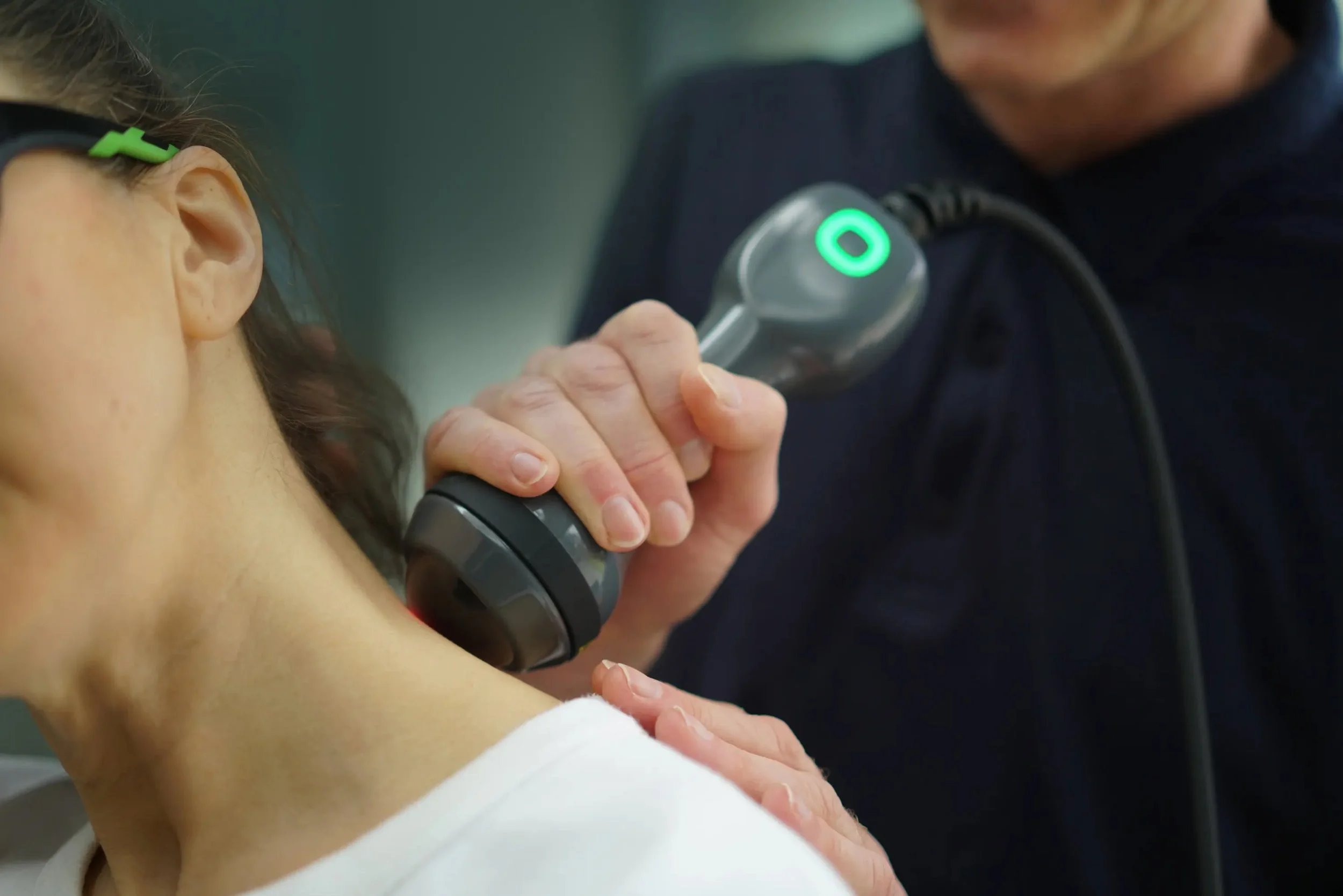
Class IV Laser Therapy
What it is
Class IV laser therapy — also known as high-intensity laser therapy or photobiomodulation — uses concentrated, warming beams of light to reach deep into muscle and connective tissue. Unlike the gentler low-level lasers you may have come across, a Class IV laser delivers enough energy to penetrate to the layers where deep, stubborn muscle and fascial pain actually lives, making it well suited to the myofascial system.
How it helps
The light energy is absorbed by your cells and gently stimulates them, encouraging the natural processes your body uses to settle pain and repair tissue. In practical terms, this means improved circulation to the treated area, reduced inflammation and swelling, and support for the body's own tissue-healing response. Because the beam can be directed precisely to tight bands and tender trigger points within a muscle, it is a comfortable, non-invasive way to ease areas that are difficult to reach by hand alone.
What the research shows
Recent reviews of high-intensity laser therapy for musculoskeletal and myofascial pain report meaningful reductions in pain and improvements in function, particularly when the laser is combined with hands-on treatment and active rehabilitation rather than used on its own. Researchers note its ability to increase microcirculation, accelerate tissue recovery, and reduce swelling and pain in deeper tissues that lighter therapies cannot reach. The evidence base is still growing, and results vary from person to person, so we use laser as one carefully chosen part of a wider treatment plan built around your individual needs.
What to expect
Treatment is quick and comfortable — most people feel only a pleasant warmth over the area. There are no injections and no needles, and you can return to your normal day straight afterwards. Laser is often most effective over a short course of sessions, and we will discuss the right approach for you at your assessment.
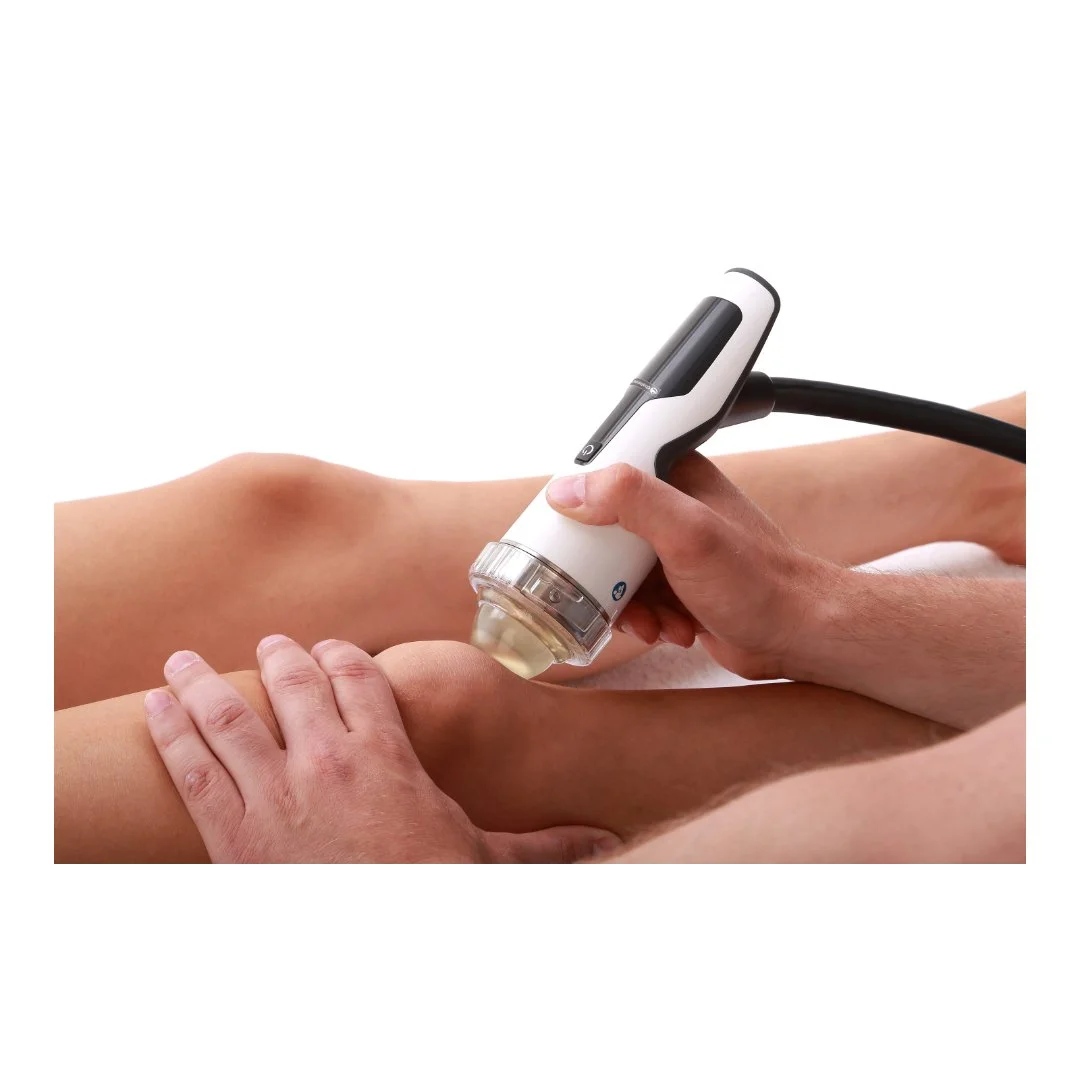
Focused Shockwave Therapy
What it is
Focused shockwave therapy delivers precisely targeted, high-energy acoustic (sound) waves into the body's tissues. The word “focused” matters: unlike radial devices that spread their energy across the surface, a focused shockwave can be directed to a specific depth, concentrating its effect exactly where the problem lies — deep within a muscle or at a painful trigger point — while sparing the tissue around it.
How it helps
Shockwaves work through the body rather than against it. The mechanical energy stimulates blood flow and the formation of new small blood vessels in the treated area, kick-starting a fresh healing response in tissue that may have become stuck in a cycle of chronic pain. It helps to release tight, tender trigger points and reduce the stiffness of the muscle and surrounding fascia. Research also points to a fascinating effect on the nervous system: shockwaves appear to calm the over-active pain-sensing nerve fibres within the fascia itself, which is one reason the relief can be both significant and long-lasting.
What the research shows
Focused shockwave therapy has a growing and encouraging evidence base for myofascial pain. Studies show measurable reductions in muscle and tissue stiffness at trigger points, along with lower pain scores that, in some research, were maintained for many months after treatment — with benefits reported up to a year later in certain cases. Because the fascia and its nerve endings are increasingly understood to be key generators of myofascial pain, a therapy that works directly on those structures is particularly relevant. As with any treatment, outcomes differ between individuals, and we assess carefully to make sure focused shockwave is the right choice for you.
What to expect
A session is short, non-invasive and requires no injections or downtime. You may feel a firm tapping sensation and some tenderness during treatment, which settles quickly. Focused shockwave is typically delivered as a small course of sessions spaced a week or so apart, and it often works best alongside hands-on therapy and a tailored exercise plan — treating not just the painful spot, but the whole functional pattern behind it.
A whole-body approach
Both Class IV laser and focused shockwave therapy are powerful tools — but they work best as part of a complete plan. Rather than simply targeting where it hurts, we assess how the whole body is moving and compensating, then combine the right advanced technology with skilled hands-on treatment and active rehabilitation to address the true source of your pain. If you would like to know whether laser or shockwave therapy could help you, please get in touch to arrange an assessment.
Key sources: HILT systematic review & meta-analysis (PMC9963402); HILT added to physiotherapy for myofascial pain syndrome (2022 review); ESWT for myofascial pain syndrome scoping review (PMC12565389, 2025); focused ESWT tissue-stiffness RCT (ScienceDirect S0965229925000780); molecular mechanisms of ESWT on fascia nociceptors (MDPI Life, PMC9146519).